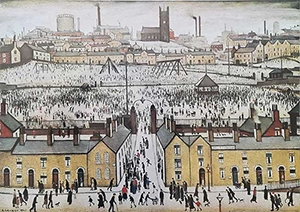
Lowry signed prints, limited editions, lithographs and originals


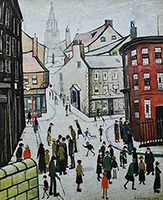
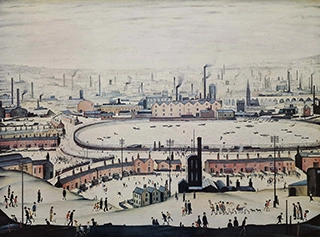
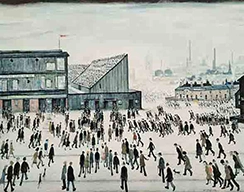
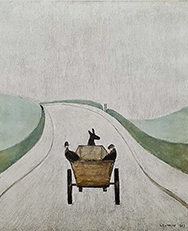
Laurence Stephen Lowry Signed Limited Edition Prints and Original Paintings, For sale on line here


25 years experience and widely regarded as the world's leading authority on paintings and prints by L.S.Lowry
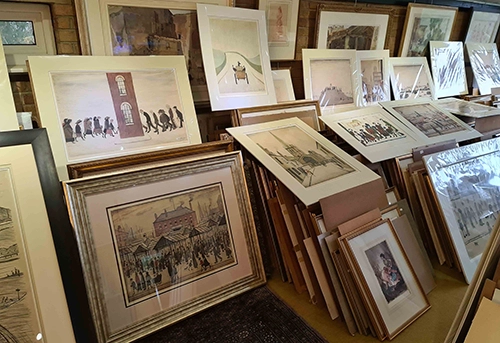
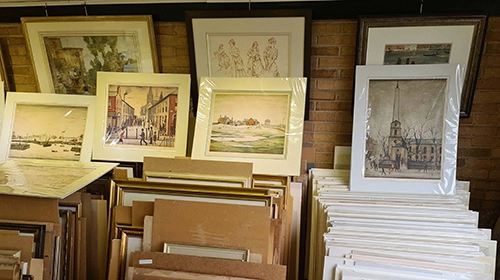
the largest collection of signed, limited edition prints by ls lowry in the UK!

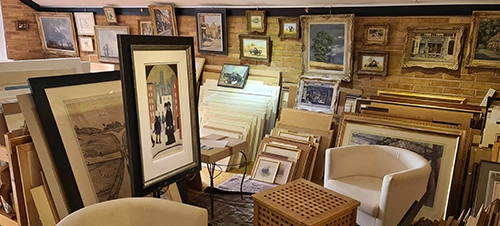
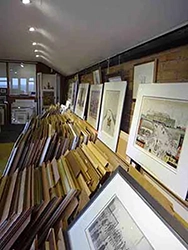
Visit the studio in Nottinghamshire, or arrange a private viewing of prints or original paintings in your home.

Most limited edition prints illustrated are in stock and well below gallery retail prices!

Originals, lithographs and limited editions prints for sale;
Signed, limited editions prints from £850; (unsigned) limited edition prints from £98

Click on images or buttons below to view a selection of signed limited edition prints for sale

Call us now Lowry 07974 371 255 or telephone 01623 799 309

Email:-d@art.info

lowry signed limited edition prints           lowry signed lithograph prints            unsigned limited edition prints

Specialist dealers to the trade and retail


Site updated:-

A short biography of L.S.Lowry


Prints and Lithographs
There are approximately 54 signed prints (signed, limited edition print titles) and 17 lithographic prints;
Approximately 26 unsigned, limited edition prints;
and numerous open edition, poster prints of decorative value only.
The signed prints usually have an embossed stamp, by the Fine art trade guild, or that of the publisher;
Some titles are simply signed and numbered,
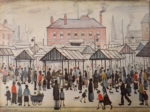
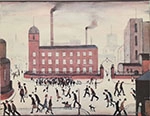
and several titles eg. 'Mill scene', 'Level crossing' and 'Market scene' are simply signed in pencil by Lowry,
but not stamped or numbered, although they are limited edition prints (editions of 750).

EMAIL:-Click Here
Phone England (0) 1623 799 309
or telephone 07974 371 255

Visa All major credit/debit cards accepted


Lowry's Life

Lowry did not like to think of himself as an amateur painter, people would occassionally accuse him of this and say he was
self-taught and untutored. Lowry commented, "Started when I was fifteen. Don't know why.
My aunt said "You are no good for anything else, so you might as well go to Art School..." He began evening classes in antique and freehand
drawing during 1905.
And later studied in both the Manchester Academy of Fine Art and The Salford Royal Technical College at Peel Park.
School records show that Lowry attended classes during the 1920's. Lowry had learnt from his teachers - people such as the Frenchman Adolphe Valette - that French
Impressionism had made a big impact on the art world. Lowry saw from exhibitions in Manchester how the current trends in modern art
were changing,
and had great affection for Pre-Raphaelites such as Rossetti and Ford Madox Brown. A naïve Sunday painter LS Lowry certainly was not, Lowry strove for his own
distinctive way of painting and drawing - and for a subject matter he could make unique, his preference eventually was the view from the Technical College
window rather than that of a model posing.

Throughout his early years L S Lowry lived in Victoria Park, the suburbs of Manchester. Due to lack of money his family moved to Station Road,
Pendlebury, there the tree lined streets changed to factory chimneys. Lowry recalled "At first I detested it, and then, after years I got
pretty interested in it, then obsessed by it". Lowry saw the subjects for his paintings all around him. In his later life, he recalled a particular event.
"One day I missed a train from Pendlebury -(a place) I had ignored for seven years - and as I left the station I saw the Acme Spinning Company's mill..
The huge black framework of rows of yellow-lit windows standing up against the sad, damp charged afternoon sky. The mill was turning out... I watched
this scene, which I'd looked at many times without seeing - with rapture..."

A writer in The Guardian newspaper, Bernard Taylor, recognised the unique quality of Lowry's work, when he reviewed one of the Lowry's early
exhibitions.
"Mr Laurence S Lowry has a very interesting and individual outlook. His subjects are Manchester and Lancashire street scenes, interpreted with technical
means as yet imperfect, but with real imagination... We hear a great deal nowadays about recovering the simplicity of vision of primitives in art.
These pictures are authentically primitive, the real thing not an artificially cultivated likeness to it. The problems of representation are solved not
by reference to established conventions, but by sheer determination to express what the artist has felt, whether the result is according to rule or not..."

Lowry worked as rent collector for the Pall Mall Property Company. He kept his work secret because he did not want people to think of him as
a part-time painter. His job led to him walking all over the city. What did he see? Children playing in the streets, people returning from work,
going off to work, gossip on the front steps, incidents, market places and Whit - processions. But all this changed in his lifetime: blitz and
rebuilding, slum clearances and new housing, changed the face of the city he had observed so well.
"I saw the industrial scene and I was affected by it. I tried to paint it all the time. I tried to paint the industrial scene as best I could.
It wasn't easy. Well, a camera could have done the scene straight off".

Lowry felt that drawings were as hard to do as painting. He worked the surface of his drawings by smudging, erasing and rubbing the pencil lines
on his paper to build the atmosphere of the drawing. He often made quick sketches on the spot on whatever paper he had in his pockets.
Lowry carefully composed his pictures in a painting room at home and took great care over placing each figure. Late in life he would sit before a canvas
or board on his easel and not know what was going to be in the painting until he started working. He called them "dreamscapes".
Bernard Taylor made the suggestion that helped Lowry to get into his painting the stark figures and the pallor of the industrial sky that he wanted.
Taylor suggested he painted on a pure white background. Lowry experimented with layers of white paint on boards, leaving them for a time so the surface
went creamy.

Lowry used a very basic range of colours, which he mixed on his palette and painted on the white background. "I am a simple man, and I use simple
materials: ivory, black, vermilion (red), Prussian blue, yellow ochre, flake white and no medium (e.g. linseed oil). That's all I've ever used in my
paintings. I like oils... I like a medium you can work into over a period of time". Looking closely at the surface of Lowry's paintings shows us the
variety of ways he worked the paint with brushes (using both ends), with his fingers and with sticks or a nail.
Some paintings are painted over other images. The 1938 painting Head of a Man (Man with Red Eyes) when x-rayed showed a female portrait and possibly
a self-portrait underneath.
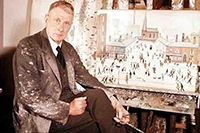
He was once asked what he did with his old suits. "Wear them", came the reply! He certainly wore them to paint in, wiping the brushes on his lapels and
sleeves.

Lowry's father died in 1932. For the next seven years, his 73 year old mother became 'bed fast' and completely ruled her son's life. After her death
in 1939, Lowry painted The Bedroom Pendlebury - in memory of those long hours he spent looking after her.
She always demanded his attention. Lowry would only get to his painting room late at night after she had settled. "She did not understand my painting,
but she understood me and that was enough". These were years of isolation and growing despair, reflected in Lowry's paintings. They depict derelict
buildings and wastelands as mirrors of himself. As an official war artist - himself emotionally blitzed - he drew the ruined shells oF
bombed-out buildings. In 1939, the year his mother died - the person he most wanted to please - he tasted success with his first London exhibition.
"After she died, I lost all interest". Continuing to paint was his "salvation".

Just when Lowry began to have success he was moving away from the subjects that everybody wanted him to paint. "Had I not been lonely none of my works
would have happened". Some of his most powerful pictures are deserted landscapes and seascapes. Some of the most difficult pictures to like are
of solitary figures and downs and outs. "I feel more strongly about these people than I ever did about the industrial scene. They are real people,
sad people.
I'm attracted to sadness and there are some very sad things. I feel like them".
Everything came too late for Lowry. But his late years saw him become a popular celebrity. He also became preoccupied about whether his art would last.
"Will I live", he asked over and over again, like the art of the Pre-Raphaelites Lowry collected and loved.
"I painted from childhood to childhood". Lowry painted and drew into his old age - often protesting to interviewers that he had "given up",
packed it in". He died aged 88 in 1976 just months before a retrospective exhibition opened at the Royal Academy. It broke all attendance records
for a twentieth century artist. Critical opinion about The Lowry remains divided to this day. Salford Museum & Art Gallery began collecting the artist's
work in 1936 and gradually built up the collection which is now at the heart of the award-winning building bearing the artist's name,
celebrating his art and transforming the cityscape again.

Galleries containing original paintings and drawings by Lowry

Aberdeen Art Gallery and Museum's Lowry paintings
Birmingham City Museums and Art Gallery's Lowry original drawings and paintings
Bolton Museum and Art Gallery's Lowry pictures
Bradford Cartwright Hall Art Galleries and Museum's Lowry paintings
Bury Art Gallery's paintings by L.S. Lowry
Buxton Museum's paintings by L.S. Lowry
Carlisle Museum and Art Gallery's paintings by L.S. Lowry
Bedford Cecil Higgins Art Gallery and Museum's paintings by L.S. Lowry
Coventry Herbert Art Gallery's Lowrys
Durham County Council's original paintings and drawings by L.S. Lowry
Derby Art Gallery's Lowrys
Derbyshire County Council's paintings by Lowry
Edinburgh Royal Scottish Academy's collection of Lowrys
Edinburgh Scottish National Gallery of Modern Art's paintings by Lowry
Glasgow Art Gallery's Lowrys
Hartlepool Gray Art Gallery and Museum's Lowrys
Huddersfield Art Gallery's Lowrys
Kendal Abbot Hall Gallery's Lowrys
Kirkcaldy Art Gallery's paintings by Lowry
Leamington Spa Art Gallery and Museum's Lowrys
Leeds City Art Gallery's Lowry's
Leicestershire Museums and Art Gallery's Lowrys
Lincoln Usher Gallery's Lowry paintings
Liverpool Walker Art Gallery's Lowrys
London the Arts Council of Great Britain Lowrys
London The British Council's Lowrys
London The Government's Lowrys
London The Imperial War Museum's Lowrys
London The National Maritime Museum's Lowrys
London The Royal Academy of Arts Lowry paintings
London The Science Museum's Lowrys
London The Tate Gallery's Lowrys
London Victoria and Albert Museum's Lowrys
Manchester City Art Gallery's Lowrys
Manchester Whitworth Art Gallery's Lowry paintings
Middlesbrough Art Gallery's Lowry original paintings and drawings.
Newcastle-upon-Tyne Laing Art Gallery's Lowry original paintings and drawings.
Gwent Museum and Art Gallery's Lowrys (Newport)
Norwich Castle Musem's Lowry original paintings and drawings.
Nottingham Castle Museum's Lowry original paintings and drawings.
Oldham Art Gallery's Lowrys
Rochdale Art gallery's Lowrys
Rugby Art Gallery's Lowry original paintings and drawings.
Sheffield Art Gallery's LSLowrys
Salford The Lowry Centre's L S Lowrys
Southampton Art Gallery's L.S. Lowry paintings
Atkinson Art Gallery's L S Lowrys (Southport)
Stockport Art Gallery's LS Lowrys
Stoke-on-Trent Museum and Art Gallery's L S Lowrys
Sunderland Museum and Art Gallery's L.S.Lowry paintings
Swindon Art Gallery's of LS Lowrys
Ulster Museum's LS Lowry paintings (Belfast)
Wakefield Art Gallery's L.S.Lowrys
City of York Art Gallery's Lowry paintings

Visit the the studio in Nottinghamshire, the largest collection of Lowry signed, limited edition prints in the UK. Site map

britisharts